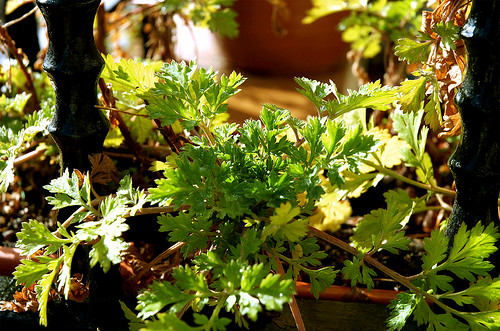
 Composition: Annual or biennial herbaceous plant of the Umbelliferae family. 15 to 50 cm high, with bulbous root (like a carrot), l branches almost from the base of the stem, ending with yellowish flowers in umbels (up 20 to 25 radios each). Tripinnate The leaves are dark green fruits are diaquenios. The whole plant gives off an odor stimulant and aromatic.
 Location: Your home is located in southeastern Europe. It is cultivated in gardens (common parsley leaves and the thick root of the bulb) and also appears in rocky places near the villages.
Harvesting: Flowering time from June to August and the leaves are harvested from June to November. Fruits from August to November and the following October to November. The roots are dried and stored after the fruits once formed.
Properties: The leaves are used increasingly parsley as a seasoning for making sauces and seasoning stews and roasts. Along with garlic, is a highly valued partner in the culinary arts.
Its active ingredients include: essential oil (oleum petroselini - with apiol and myristicin - 7% and 5% ensemillas roots), a glycoside (the apiina), flavones, vitamins C and A.
These principles give this plant diuretic, stomachic, expectorant and stimulating appetite. Some authors report an aphrodisiac by eating parsley. Root infusions are recommended 3 or 4 teaspoons added in the water.
infusions of leaves and seeds are used for coughs, jaundice, amenorrhea, and dysmenorrhea. At higher rates can be toxic.
Image: flickr


0 comments:
Post a Comment